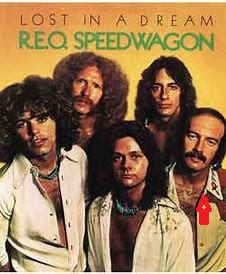


Gregg Philbin
Band:REO Speedwagon
Genres:Rock
Born:03/13/1947
Died:10/24/2022
From: Champaign, Illinois
Musician Speciality:Singer/Bass
Biography:
REO Speedwagon (originally stylized as R.E.O. Speedwagon), or simply REO, is an American rock band from Champaign, Illinois. Formed in 1967, the band cultivated a following during the 1970s and achieved significant commercial success throughout the 1980s. Its best-selling album, Hi Infidelity (1980), contained four US Top 40 hits and sold more than ten million copies.[1]
REO Speedwagon has sold more than 40 million records and charted 13 Top 40 hits, including the number ones “Keep On Loving You” and “Can’t Fight This Feeling“. Its mainstream radio play waned in the late 1980s, though it remains a popular live act.
History
Formation
In the fall of 1966, Neal Doughty was just beginning an electrical engineering program at the University of Illinois in Champaign, Illinois, as a junior. On his first night of classes, he met fellow student Alan Gratzer. Doughty had learned some Beatles songs on his parents’ piano, and Gratzer had been a drummer in local bands since high school. The two held an impromptu jam session in the basement of their Illinois Street Residence Hall dormitory.[2][3]
Gratzer continued to perform with his band (which had a keyboard-playing lead singer), and Doughty began turning up at gigs. Doughty eventually began sitting in on a few songs. On the last day of the university’s spring semester, guitarist Joe Matt called the band’s leader and told him that he and the other members (Gratzer and bassist Mike Blair) had decided to start a new band with Doughty where everyone but Doughty would sing.
The new band made a list of songs to learn over the summer break. Doughty landed a summer job and bought his first organ. On his Farfisa organ, he learned “Light My Fire” by The Doors. The members returned to school in the fall of 1967 and had their first rehearsal before classes started. They named the band REO Speedwagon, from the REO Speed Wagon, a 1915 truck that was designed by Ransom Eli Olds.[4] Doughty had seen the name written across the blackboard when he walked into his History of Transportation class on the first day they had decided to look for a name. Rather than pronouncing REO as a single word as the motor company did (“REE-oh“), they chose to spell the word out, pronouncing each letter individually (“R-E-O”). An advertisement in the school newspaper produced their first job, a fraternity party that turned into a food fight. They continued to perform cover songs in campus bars, fraternity parties and university events.
In early 1968, Terry Luttrell became lead singer and Bob Crownover joined as the guitar player, replacing Matt after he graduated. When Mike Blair left the band in mid-1968, Gregg Philbin replaced Blair and Joe McCabe played sax until he moved on to Southern Illinois University. Marty Shepard then came aboard on trumpet, soon joined by a second trumpeter named Steve (last name unknown). Keyboardist Doughty would sometimes join the other two as a third horn player on some tunes. But Shepard left during the following year and horns were dropped from the group altogether by the summer of 1969. [5]
Bob Crownover played guitar for the group until mid-1969 when Bill Fiorio replaced him. Fiorio then departed in late 1969, eventually assuming the name Duke Tumatoe, and went on to form the All Star Frogs. Steve Scorfina (who would go on to found progressive rock/album-oriented rock band Pavlov’s Dog) came aboard for over a year, composing with the band and performing live, before being replaced by Gary Richrath in late 1970.
Richrath had driven 100 miles (160 km) to see the band and become a part of it, saying “I’m going to be a part of that band whether they like it or not.” Richrath was a Peoria, Illinois-based guitarist and prolific songwriter who brought fresh original compositions. With him on board, the regional popularity of the band grew tremendously. The St. Louis, Missouri-based radio station KSHE, one of America’s most influential rock stations, began supporting it, elevating the band’s profile outside its Midwestern stronghold.
Epic Records signed the band to a recording contract in 1971 after Paul Leka, an East Coast record producer, saw the band playing before an enthusiastic outdoor crowd in Peoria during a rainstorm and brought the band to his recording studio in Bridgeport, Connecticut where it recorded original material for its first album.[6] The lineup on the first album consisted of Richrath, Gratzer, Doughty, Philbin and Luttrell.[4]
Early years
In the early days, REO was managed by their University of Illinois classmate Irving Azoff, who would go on to manage the Eagles and many others, eventually becoming one of the most powerful men in the recording industry.
With its equipment being hauled to dates in a friend’s station wagon, REO played bars and clubs all over the Midwest. The band’s debut album, R.E.O. Speedwagon, was released on Epic Records in October 1971.[4] The most popular track on this record was “157 Riverside Avenue“; it remains an in-concert favorite. The title refers to the address in Westport, Connecticut, where the band stayed while recording in Leka’s studio in Bridgeport.
Although the rest of the band’s lineup remained stable, REO Speedwagon switched lead vocalists three times for their first three albums. Luttrell left the band in early 1972, eventually becoming the vocalist for Starcastle. He was replaced by Kevin Cronin.[4] Cronin recorded one album with the band, 1972’s R.E.O./T.W.O. but left the band during the recording sessions for 1973’s Ridin’ the Storm Out because of internal conflicts.[7] Ridin’ the Storm Out was completed with Michael Bryan Murphy on lead vocal, and it featured Neal Doughty’s “wailing storm siren” synthesizer intro on the title track. Murphy stayed on for two more albums, Lost in a Dream (October 1974) and This Time We Mean It (July 1975), before Cronin returned to the fold in January 1976 and recorded R.E.O., which was released in July of that year.[4]
Cronin’s return came after Greg X. Volz turned down the position for lead vocalist after becoming a Christian.[8]
In 1977 the REO members convinced Epic Records that their strength was in their live performances. Epic agreed to let them produce the band’s first live album, Live: You Get What You Play For (January 1977), which was eventually certified platinum.[4] That same year, the band moved to Los Angeles.
Also in 1977, bassist Gregg Philbin left the band.[4] Depending upon which member is expressing an opinion, it was either because Philbin was disenchanted with the new corporate-structure REO where Cronin and Richrath got bigger slices of the pie instead of the equal credit they once shared as a “garage band”, or that he was asked to leave over his lifestyle issues affecting the music quality.[9] Philbin was replaced by another Centennial High School (in Champaign, Illinois) alumnus, Bruce Hall,[3] to record You Can Tune a Piano but You Can’t Tuna Fish.[4] The album was released in March 1978 and has received much FM radio airplay over the years, thanks to songs like “Roll with the Changes” and “Time for Me to Fly“. The album was REO’s first to make the Top 40, peaking at No. 29. It sold over two million copies in the US, ultimately achieving double platinum status.
In 1979 the band took a turn back to hard rock with the release of Nine Lives in July 1979.[4]