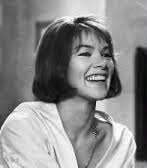


Glenda May Jackson
Band:Glenda Jackson and the Pirates
Genres:Broadway Films, Musicals
Born:05/09/1936
Died:06/15/2023
From: Birkenhead, United Kingdom
Musician Speciality:Singer/Actress/Politician
Biography:
Glenda May Jackson CBE (9 May 1936 – 15 June 2023) was an English actress and politician. She was one of the few artists to achieve the Triple Crown of Acting, having won two Academy Awards, three Emmy Awards and a Tony Award. She was made a CBE by Queen Elizabeth II in 1978.
She won the Academy Award for Best Actress twice: for her roles in the romance films Women in Love (1970) and A Touch of Class (1973), not appearing in person to collect either of her Oscars due to work commitments.[2] She won the BAFTA Award for Best Actress in a Leading Role for Sunday Bloody Sunday (1971). Her other notable roles include Mary, Queen of Scots (1971), Hedda (1975), The Incredible Sarah (1976) and Hopscotch (1980). She won two Primetime Emmy Awards for her role as Elizabeth I in the BBC series Elizabeth R (1971). She received the British Academy Television Award for Best Actress for her role in Elizabeth Is Missing (2019).
Jackson studied at the Royal Academy of Dramatic Art (RADA). She made her Broadway debut in Marat/Sade (1966). She received five Laurence Olivier Award nominations for her West End roles in Stevie (1977), Antony and Cleopatra (1979), Rose (1980), Strange Interlude (1984) and King Lear (2016), the latter being her first role after a 25 year absence from acting, which she reprised on Broadway in 2019. She won the Tony Award for Best Actress in a Play for her role in the revival of Edward Albee‘s Three Tall Women (2018).
Jackson took a hiatus from acting to take on a career in politics from 1992 to 2015, and was elected as the Labour Party MP for Hampstead and Highgate in the 1992 general election. She served as a junior transport minister from 1997 to 1999 during the government of Tony Blair, later becoming critical of Blair. After constituency boundary changes, she represented Hampstead and Kilburn from 2010. At the 2010 general election, her majority of 42 votes, confirmed after a recount, was the narrowest of that parliament.[3] Jackson stood down at the 2015 general election and returned to acting.
Early life
Glenda Jackson was born at 151 Market Street in Birkenhead, Cheshire, on 9 May 1936. Her mother named her after the Hollywood film star Glenda Farrell.[4] Shortly after her birth, the family moved to Hoylake, on the Wirral.[5] Her family were very poor and lived in a two-up two-down house with an outside toilet at 21 Lake Place. Her father Harry was a builder, while her mother Joan (née Pearce) worked on the local supermarket checkout, pulled pints in a pub and was a domestic cleaner.[6][7][8]
The oldest of four daughters, Jackson was educated at Holy Trinity Church of England and Cathcart Street primary schools, followed by West Kirby County Grammar School for Girls in nearby West Kirby. She performed in the Townswomen’s Guild drama group during her teens.[7][8][9][10] Jackson made her first acting appearance in J. B. Priestley‘s Mystery of Greenfingers in 1952 for the YMCA Players in Hoylake.[11] She worked for two years in Boots the Chemists, before winning a scholarship in 1954 to study at the Royal Academy of Dramatic Art (RADA) in London.[12] Jackson moved to the capital to begin the course in early 1955.[13]
Acting career
1957–1968: Early career
In January 1957, Jackson made her professional stage debut in Ted Willis‘s Doctor in the House at the Connaught Theatre in Worthing.[14] This was followed by Terence Rattigan‘s Separate Tables, while Jackson was still at RADA,[15] and she began appearing in repertory theatre.[16] She was also a stage manager at Crewe in repertory theatre.[8]
From 1958 to 1961, Jackson went through a period of two and a half years in which she was unable to find acting work. She unsuccessfully auditioned for the Royal Shakespeare Company (RSC), and undertook what she later described as “a series of soul-destroying jobs”. This included waitressing at The 2i’s Coffee Bar, clerical work for a large City of London firm, answering phones for a theatrical agent, and a role at British Home Stores. She also worked as a Bluecoat at Butlin’s Pwllheli holiday resort on the Llŷn Peninsula in North West Wales, where her new husband and fellow actor Roy Hodges was a Redcoat. Jackson eventually returned to repertory theatre in Dundee, but worked in bars in between acting jobs.[17]
Jackson made her film debut in a bit part in the kitchen sink drama This Sporting Life (1963). A member of the RSC for four years from 1963, she originally joined for director Peter Brook‘s Theatre of Cruelty season, which included Peter Weiss‘ Marat/Sade (1965), where she played an inmate of an insane asylum portraying Charlotte Corday, the assassin of Jean-Paul Marat.[18] The production ran on Broadway in 1965 and in Paris[16] (Jackson also appeared in the 1967 film version). She appeared as Ophelia in Peter Hall‘s production of Hamlet the same year.[19] Critic Penelope Gilliatt thought Jackson was the only Ophelia she had seen who was ready to play the Prince himself.[20]
The RSC’s staging at the Aldwych Theatre of US (1966), a protest play against the Vietnam War, also featured Jackson, and she appeared in its film version, Tell Me Lies.[21] Later that year, she starred in the psychological drama Negatives (1968), which was not a huge financial success, but won her more good reviews.
1969–1980: Film and Television
Jackson’s starring role in Ken Russell‘s film adaptation of D. H. Lawrence‘s Women in Love (1969) led to her first Academy Award for Best Actress. Brian McFarlane, the main author of The Encyclopedia of British Film, wrote: “Her blazing intelligence, sexual challenge and abrasiveness were at the service of a superbly written role in a film with a passion rare in the annals of British cinema.”[22]
In the process of gaining funding for The Music Lovers (1970) from United Artists, Russell explained it as “the story of a homosexual who marries a nymphomaniac,”[23] the couple being the composer Pyotr Ilyich Tchaikovsky (Richard Chamberlain) and Antonina Miliukova, played by Jackson. The film received mixed reviews in the U.S.; the anonymous reviewer in Variety wrote of the two principals, “Their performances are more dramatically bombastic than sympathetic, or sometimes even believable.”[24] The Music Lovers was a box-office success in Europe, reaching No. 1 in the UK’s weekly rankings in March 1971. It was the first of four films starring Jackson which topped the box-office charts in the UK.[25][26] Jackson was initially interested in the role of Sister Jeanne in The Devils (1971), Russell’s next film, but turned it down after script rewrites and deciding that she did not wish to play a third neurotic character in a row.[27]
Jackson had her head shaved to play Queen Elizabeth I in the BBC‘s serial Elizabeth R (1971). After the series aired on PBS in the US, she received two Primetime Emmy Awards for her performance. She also played Queen Elizabeth in the film Mary, Queen of Scots; and gained an Academy Award nomination as well as a BAFTA Award for her role in John Schlesinger‘s Sunday Bloody Sunday (both 1971).[28] In July, Sunday Bloody Sunday topped the UK box-office charts for two weeks.[26] That year, British exhibitors voted her the 6th most popular star at the British box office.[29] Jackson’s popularity was such that 1971 saw her receive Best Film Actress awards from the Variety Club of Great Britain (who also rewarded her similarly in 1975 and 1978), the New York Film Critics and the US National Society of Film Critics.[8]
Mary, Queen of Scots was premièred in December 1971 in Los Angeles and was the 1972 Royal Film Performance in Britain, attended by the Queen Mother, Princess Margaret and Lord Snowdon.[30][31] The film reached No. 1 in the UK box-office charts in April that year, a position it held for five consecutive weeks.[26] Jackson made the first of several appearances with Morecambe and Wise in their 1971 Christmas special. Appearing in a comedy sketch as Cleopatra for the BBC Morecambe and Wise Show, she delivered the line, “All men are fools and what makes them so is having beauty like what I have got.”[32] Her later appearances included a song-and-dance routine (where she was pushed offstage by Eric), a period drama about Queen Victoria, and another musical routine (in their Thames Television series) where she was elevated ten feet in the air by a misbehaving swivel chair.[33][34] Jackson and Wise also appeared in a 1981 information film for the Blood Transfusion Service.[35]
Filmmaker Melvin Frank saw Jackson’s comedy skills on the Morecambe and Wise Show and offered her the lead female role in his romantic comedy A Touch of Class (1973), co-starring George Segal, which was a UK box-office No. 1 in June 1973.[26] In February 1974, Jackson’s role in the film won her the Academy Award for Best Actress. She continued to work in the theatre, returning to the RSC for the lead in Ibsen‘s Hedda Gabler. A later film version directed by Trevor Nunn was released as Hedda (1975), for which Jackson was nominated for an Oscar. In The New York Times, Vincent Canby wrote: “This version of Hedda Gabler is all Miss Jackson’s Hedda and, I must say, great fun to watch … Miss Jackson’s technical virtuosity is particularly suited to a character like Hedda. Her command of her voice and her body, as well as the Jackson mannerisms, have the effect of separating the actress from the character in a very curious way.”[36]
In 1978, she scored box office success in the United States in the romantic comedy House Calls, co-starring Walter Matthau, with the film spending two weeks at No. 1 in the US box-office rankings.[37][38][39] House Calls was the biggest box-office hit of her career in the US.[40] That year, she was awarded a CBE.[8] In 1979, she reunited with her A Touch of Class colleagues Segal and Frank for the romantic comedy Lost and Found.[41][42] Jackson and Matthau teamed again in the comedy Hopscotch (1980), which debuted at No. 1 in its opening weekend at the US box office, also spending its second week in the top spot.[43][44][45]
For her 1980 appearance on The Muppet Show, Jackson told the producers she would perform any material they liked. In her appearance, she has a delusion that she is a pirate captain who takes over the Muppet Theatre as her ship.[46]