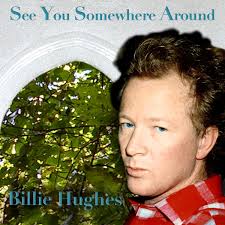


Billie Hughes
Band:Lazarus Band
Genres:Rock, Contemporary Christian
Born:04/04/1948
Died:07/03/1998
From: Graham, Texas
Musician Speciality:Singer/Guitar
Biography:
Billie Keith Hughes (April 4, 1948 – July 3, 1998) was an American recording artist, songwriter, musician, and record producer. He is best known for his successful artist career in Japan, lead vocalist of his band Lazarus and his collaboration with Roxanne Seeman writing songs for Philip Bailey, Phil Collins, Bette Midler, The Jacksons, The Sisters Of Mercy, Wink, and for his songs in film and television. He has two Emmy nominations.[1]
Hughes song “Welcome To The Edge”, with the Japanese title “Todokanu Omoi”とどかぬ想い (One-Sided Love)” was the theme of the Japanese television drama I’ll Never Love Anyone Anymore (Mou Daremo Aisanai) (もう誰も愛さない).[2][3] It became the top-selling international single in Japan in 1991 after selling over 500,000 copies.[4] Hughes was awarded with the No. 1 International Single of the Year in 1992 at the NHK Grand Prix Japanese Gold Disk Awards.[5][6][7]
I’ll Never Love Anyone Anymore (Mou Daremo Aisanai) (もう誰も愛さない) featuring Billie Hughes “Welcome to the Edge” (“Todokanu Omoi”) began rebroadcasting on TVK (Television Kanagawa) in the Greater Tokyo Area, on October 8, 2019.
Early life and education
Billie Hughes on Abilene Christian College campus 1968
Billie Keith Hughes was born on April 4, 1948, in Graham, Texas, the son of Betty (née Capps) and Billie Wayne Hughes (Aug. 5, 1924 – November 14, 2011), a travelling minister of the Church of Christ, math teacher, and general contractor.[8] He had an older brother named Jim, (April 10, 1945 – May 3, 2019). Billie Keith was raised in a religious family moving from city to city. His father, Billie Wayne, was a minister, elder and education director of the Church of Christ in Sioux Falls, South Dakota, Denver, Colorado, and Marble Falls, Texas. Billie Wayne Hughes wrote “Studying Angels” and taught three classes on angels at the Abilene Christian University.[9]
Hughes attended Abilene Christian College in Abilene, Texas.[10][11] Hughes was offered a scholarship to Boston University as a violinist, but turned it down. He was the first chair violinist in the Abilene Christian College Orchestra and a member of the Abilene Christian College Acapella Choir.[12] In September 1967, he became a member of the ACCents, an on-campus group that was formed two years earlier. All four singers in the new lineup played instruments. The ACCents performed for civic clubs, events including the Purple and White alumni parties over the state, the ACC chapel, and toured youth fellowships sponsored by Churches of Christ in Dallas, Jackson, Mississippi; Macon, Georgia; and Jacksonville, Gainesville, Tampa and Hialeah, Florida. Hughes was quoted as saying “A lot of our job is recruiting.” In contemporizing their repertoire, he remarked “It’s music that belongs to the set of today instead of the set of 10 to 20 years ago”[13][14]
He played violin in the ACC Orchestra tour of Oklahoma, Kansas, and Texas, December 8–14, 1968 and in the Abilene Philharmonic Orchestra accompaniment for the homecoming musical “Oklahoma!”.[13][15]
Hughes co-founded another popular campus singing group called the Blue Sky Investment. The group consisted of Hughes, arranger, tenor vocalist and classical guitarist, Mike Haynes and Kay Ross on vocals, Carl Keesee on bass, and Marshal Locke on drums.[16] The Blue Sky Investment held performances at Abilene Christian College, the University of Oklahoma, and for private engagements. Hughes composed original arrangements of songs from the Beatles repertoire for Blue Sky Investment performances opening a series of shows by ACC talent on April 4, 1968.[17]
While at ACC, Hughes formed his own band, Shiloh, with Carl Keesee and Gary Dye. They met Peter Yarrow after a Peter, Paul & Mary concert at a local venue, and played their tape for him. They were signed by Yarrow and Phil Ramone to Bearsville Records, after which he dropped out of college and moved into Peter Yarrow’s cabin in Woodstock to pursue his career with his band, renamed Lazarus.
Career
Lazarus
Hughes began his recording career as leader of the group Lazarus. In association with Peter Yarrow of Peter, Paul & Mary, Lazarus moved to Woodstock, New York, signing with the newly formed Bearsville Records[18] label, under the direction of Albert Grossman.
“Yarrow’s influence on the group’s style was dramatic…Before Peter taught us how to sing together, our style was delicate, baroque and mainly Instrumental. We seldom used more than a solo voice in any of our original material.”
— Bill Hughes, [1]
Two Lazarus albums produced by Yarrow and Phil Ramone were recorded and released on Bearsville.[19] In the next four years, Lazarus performed extensively throughout the United States and Canada. They opened for Todd Rundgren in Vermillion, South Dakota, at his USD concert, a city known in pop culture as the Vermillion Rundgren name-drops on his Back to the Bars live album.[20]
Lazarus released two albums, the first eponymous Lazarus in 1971,[21] and the second, A Fool’s Paradise in 1973.
In 1974, The Lettermen covered the Hughes song “Eastward“, from the first Lazarus album. It was released as a single, reaching No. 16 on the Billboard US Adult Contemporary chart, and included on The Lettermen’s Now And Forever album.
In 1976 Lazarus won the Clio Award for “Life Savers” Best Commercial of the Year which ran nine years nationwide.[22][23][24]
Solo career
In the mid ’80s Hughes lived in London, Ontario Canada where he regularly performed at Smale’s Pace, a well-known coffeehouse on the Canadian folk circuit,[25] at Groaning Board,[26] and at folk festivals across Canada.[27] During the Canadian years he was sometimes accompanied by David Bradstreet[28] and Lazarus bassist Carl Keesee, and occasionally Lazarus performed as a full band including Randy Kumano, Allan Soberman and Wayne Smith.
John Capek, the first independent producer to produce a broadcast recording for the CBC, produced Bill Hughes at the CBC studios.[29]
In January 1978, CBS Records Canada announced the signing of Bill Hughes, former member of the band Lazarus, to a long-term recording contract. Hughes was the first recording artist signed by the Canadian affiliate of CBS to receive a guaranteed American release and full tour support. A reception for the signing of Hughes was held at the Prince Hotel in Toronto.[30][31] Hughes shared his intention of setting up his residence in Canada and applying for Canadian citizenship and spoke of his plans to record in Los Angeles in the following months.
In 1982, Hughes released an album entitled “Last Catch” credited to “Horton, Bates & Best”, a solo album by Bill Hughes that was re-released digitally in 2006 with the title “A Tribute to Canadian Songwriter by Billie Hughes”. The album comprised nine cover versions of songs by Canadian songwriters including: Bruce Cockburn, David Wiffen, Brent Titcomb, David Bradstreet, Colleen Peterson and David Essig and was well received by the Canadian press.[32][33][34]