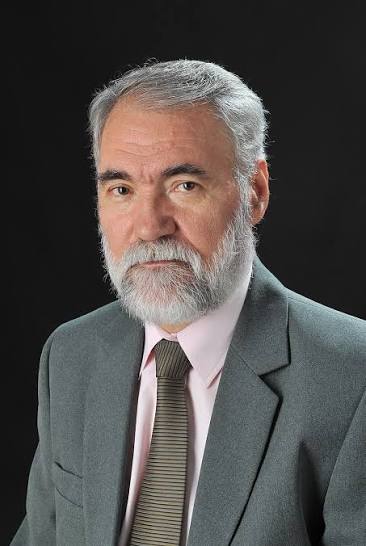


Tudor Chiriac
Band:Nicolae Dabua
Genres:Classical, Folk
Born:03/21/1949
Died:08/19/2026
From: Ciuciuleni, Moldova
Musician Speciality:Composer/Prof. Dr.
Biography:
He was a professor of Music Theory, Solfeggio, Harmony, Analysis of Musical Creations at the “Ștefan Neaga” College of Music, Chișinău (1975-1979), member of the College of the Ministry of Culture of the Republic of Moldova for the acquisition of art values (1979-1981), Vice-President of the Union of Composers and Musicologists of the Republic of Moldova (1993), Artistic Director of the National Philharmonic of Chișinău (1993-1994).
He pursued doctoral studies in composition at the Gheorghe Dima Academy of Music in Cluj between 2001-2005.
Tudor Chiriac’s creation is under the sign of the principle of integrity in diversity . The sphere of musical genres approached by the composer – diverse – is governed by the conception of music with an integral entity: of Romanian ancestral filiation . The phrase belongs to Tudor Chiriac [ 3 ] and represents that perimeter of universal music in which his creation is inscribed with accuracy and honesty. In this direction, a priority for the composer, there is academic music and the superior Romanian genre , about which Constantin Brăiloiu also wrote .
Key highlights
As an artistic phenomenon of a cultural-academic nature, Tudor Chiriac’s creation is in accordance with the fundamental principles of the processuality of music as a temporal art, with the capital laws of becoming that make up the philosophy of form, with the principle of defining the musical genre, depending on the ethos and content of the music.
“These principles represent superior musical thinking, which generates healthy music with a cohesive, solid dramaturgy . Without them, a national school of composition cannot be qualified as such” – notes the page’s owner.
Chronologically, the composer’s training and activity coincide with the period of modernism of the 20th and 21st centuries; modernity, ancestrality and identity are the defining components of his creation. However, in relation to the modernism of these centuries, Tudor Chiriac mentions: “The modern spirit of a musical work does not consist in the number of clusters and dissonances, but in the fact that it raises any question marks in front of its contemporaries.” [ 4 ]
About creation
For the composer Tudor Chiriac, the art of sounds represents a form of communication of major existential meanings, and not just an opportunity to discuss “neologisms” and its inner order. Establishing the discipline of Semantics of Music at the “George Enescu” National University of Arts in Iași, Tudor Chiriac writes the study Semantics of Music – Fundamental Principles , from which the deeply scientific motivation that led the author to announce the semantic codes of some of his works is evident. These codes – semantic conventions – are like small school programs, which facilitate access to the ideational layer of his music. It is an unprecedented case in the history of universal music, when a composer leaves testimonies about his creative intentions and conceptions, theorizing his bold, even unusual, gesture in principle. When Ion Gagim said: “ The composer Tudor Chiriac is a freethinker ”, also made this clarification of principle.